
“What for?”
“Some house paperwork. Nothing complicated.”
“What kind of paperwork?”
He sighed. That sigh he used whenever I dared to ask for an explanation. “Honey, I told you. It’s to improve the loan terms. Don’t worry, I handle that stuff.”
“Sure.”
“Just sign and that’s it.”
I looked him straight in the eye. “And then?”
He finally looked up. “Then what?”
“After I sign.”
He smiled slowly. “Then we can rest.”
He didn’t say we. He said “rest” like someone talking about an exit door.
That night, I waited for him to fall asleep. Bruno snored lightly, one hand on his chest and his phone under his pillow. Before, I would see that and think: Poor guy, he’s exhausted. Tonight I thought: Even in his sleep, he hides the evidence.
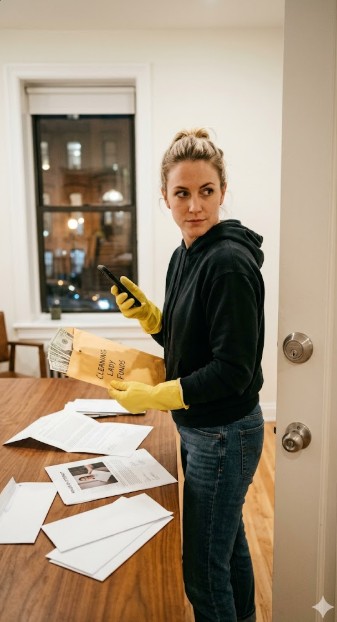
I got up without making a sound. I pulled the shoebox from under the bed. Inside were all the envelopes. Twelve weeks. Twelve payments. Twelve humiliations folded into bills.
I counted them on the kitchen table. There was enough to pay for a legal consultation, change the locks, have documents copied, and still buy myself a coffee without asking for permission.
I put on a hoodie, grabbed the car keys, and left. New York City in the middle of the night has a strange silence. It’s not complete silence. It’s a murmur of refrigerators, distant dogs, garbage trucks, and people who start working before others finish lying.
I went to a 24-hour print shop near Union Square. I made copies of everything I had found in Bruno’s study that afternoon. Because yes, the cleaning lady had seen the papers. And she hadn’t just seen them; she had photographed them.
There was a supposed authorization to sell the house. A transfer of rights. A power of attorney with my name misspelled. A preliminary contract with a buyer named Sarah Villalobos.
And a separate sheet, printed in fine print, where I “accepted” that Bruno could dispose of the property due to “voluntary abandonment of the marital home.”